


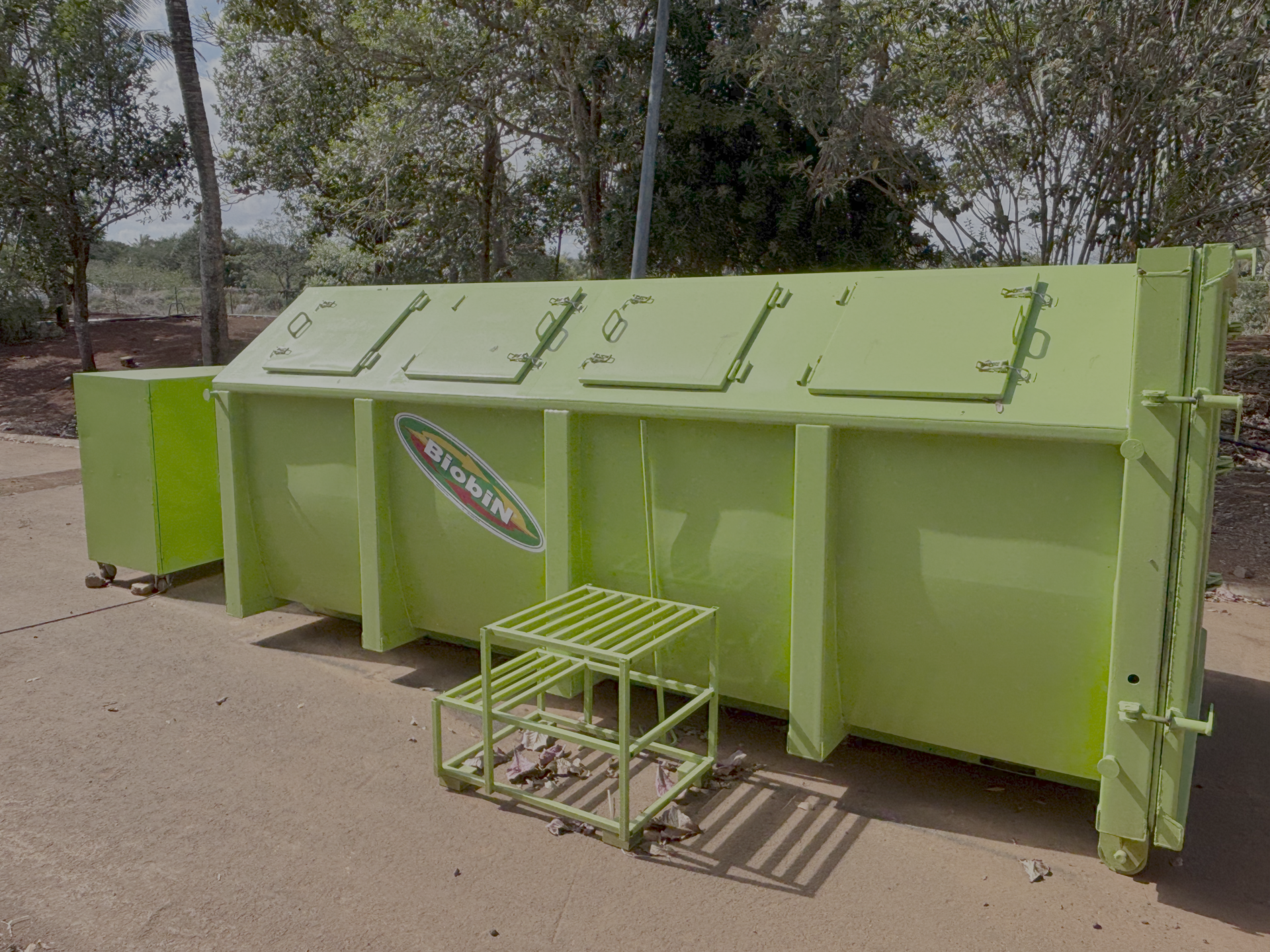
Every day, kitchens across Azuri prepare meals for residents, teams and visitors. Along the way, they produce something far less appetising: food waste. Rather than sending it to landfill, Azuri has started turning these scraps into a valuable resource. Through a new composting pilot with BioBin Mauritius, food waste is becoming rich organic compost that will nourish the village's farm and gardens.
Why food waste matters
Food waste is one of the largest parts of everyday rubbish. In Mauritius, most of it ends up at Mare Chicose, the island's only landfill. There, it breaks down without air and releases methane, a powerful greenhouse gas.
Yet food scraps are not really waste at all. Composted the right way, they become humus, a natural fertiliser that helps soil hold water and grow healthier plants. The challenge is to collect and process them on site, cleanly and without unpleasant smells.
At Azuri, the restaurants and the staff canteen produce food waste every day. Our objective is simple: turn this waste into a resource, close to where it is created.
How the BioBin works
The BioBin is a patented composting vessel installed on site. It speeds up a natural process that would otherwise take months, with no chemicals or added microbes.
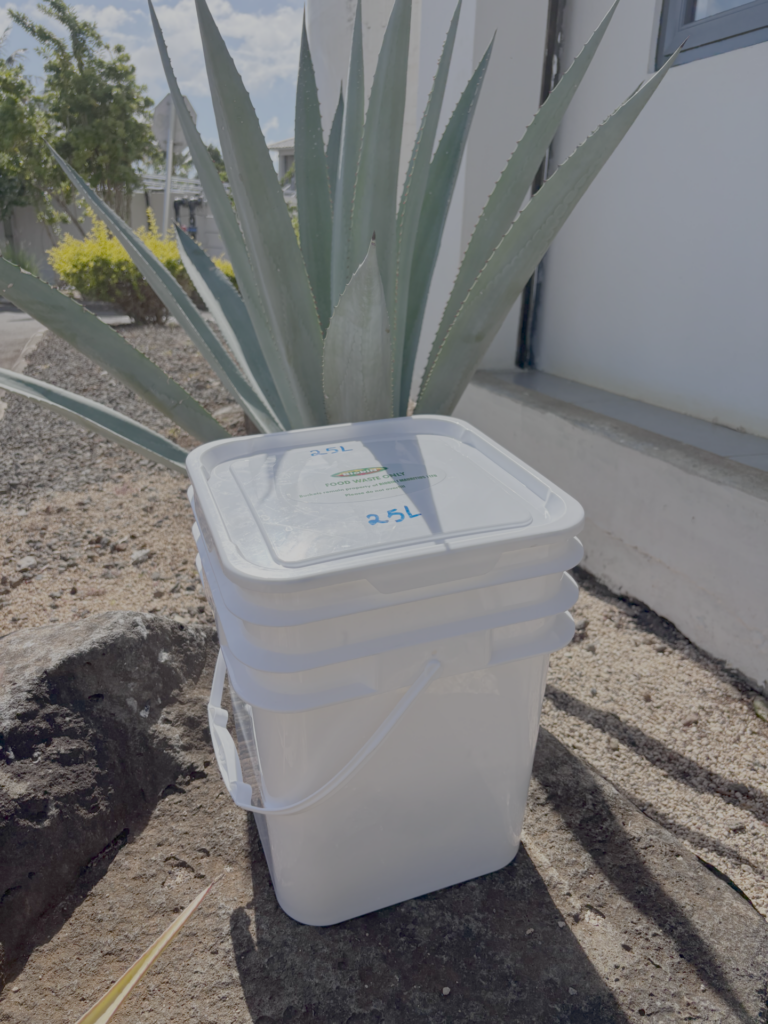
- Collection: food scraps are gathered in 25-litre bins from participating kitchens.
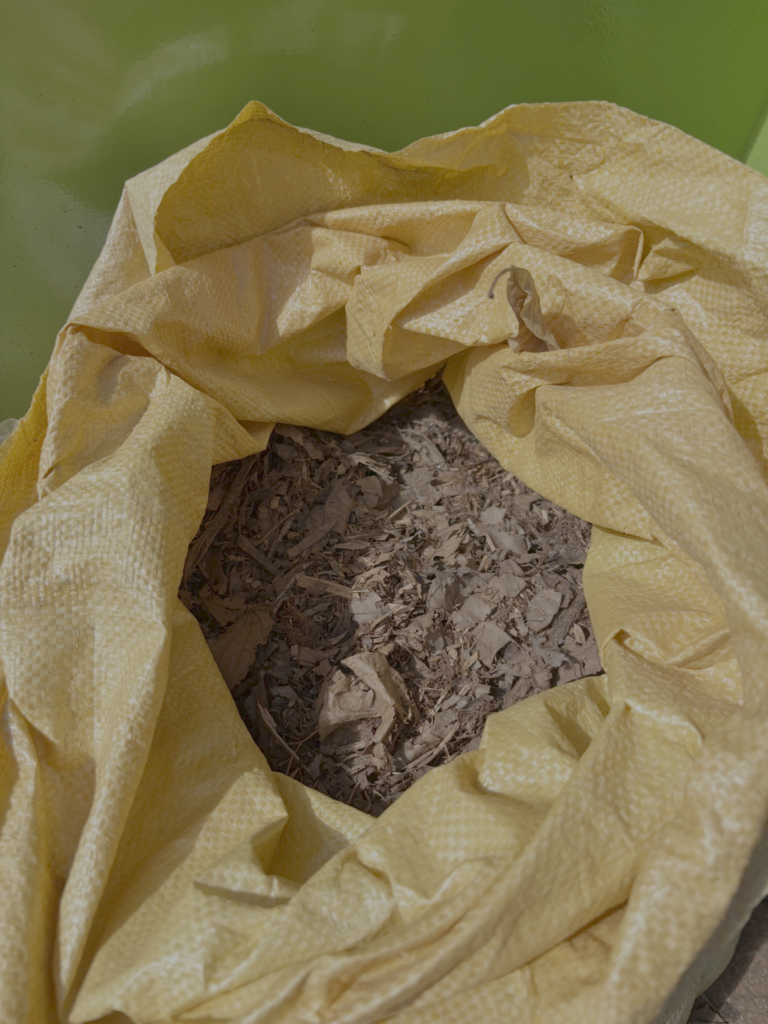
- Mixing: in the BioBin, the scraps are combined with carbon-rich materials such as wood chips or sawdust.
- Composting: air is drawn into the vessel to kickstart decomposition, while a bio-filter keeps odours under control.
- Result: the process produces humus, a chemical-free organic compost ready to enrich the soil.
A pilot starting with our kitchens
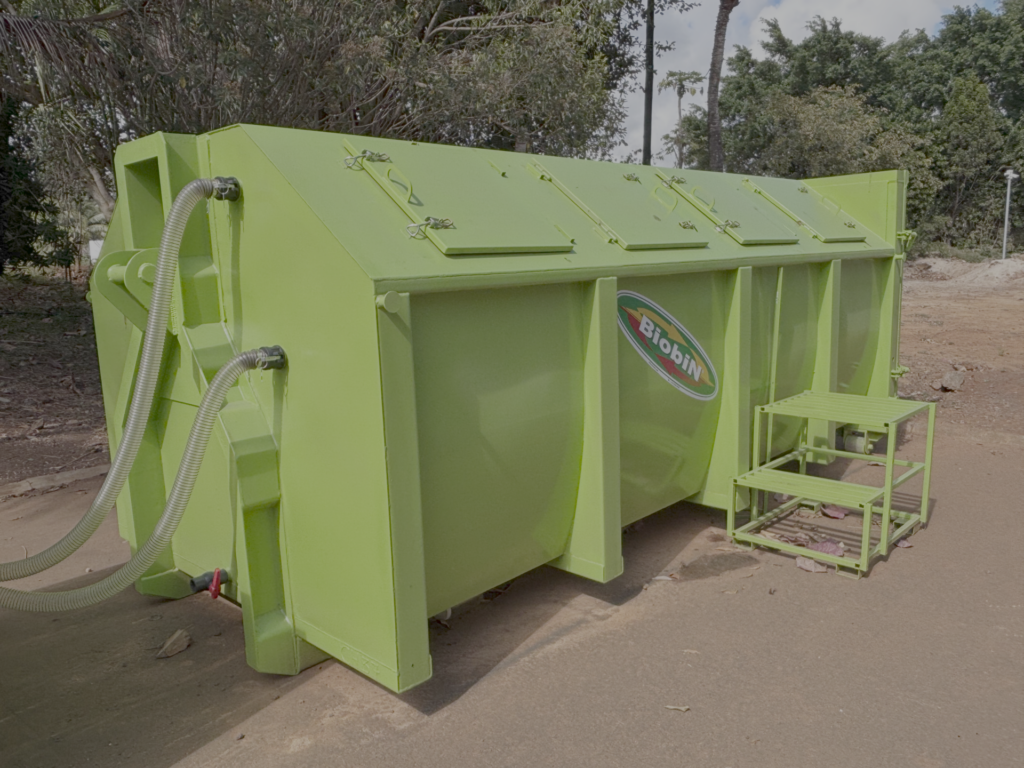
Azuri launched the pilot in early October 2026, in partnership with BioBin Mauritius. The BioBin is installed in the village's technical yard, and two members of our team have been trained to run it day to day.
The first phase focuses on the staff canteen and Rivazur. Starting with professional kitchens allows us to control what goes into the BioBin, which is key to producing good-quality compost. Within a month, we expect to see the first results and fine-tune the process.
A circular ecosystem at Azuri
The BioBin is one part of a wider loop, where what the village produces goes back into the village.
- From kitchen to compost: food scraps from our kitchens are turned into organic compost.
- From compost to farm and gardens: the compost will enrich the soil of the vegetable farm near Azuri and the gardens around the village.
- From branches to wood chips: branches trimmed around the village are chipped and reused in Azuri's landscaping. Wood chips are also the kind of carbon material the BioBin needs.
- From farm to table: the fresh produce grown on the farm returns to the village.
This circular approach reduces what leaves Azuri as waste, supports local agriculture and brings sustainability into the daily life of the village.
What comes next, and how residents can be part of it
Composting works best when food waste is carefully separated from everything else. Plastic, glass or packaging in the mix can spoil an entire batch. This is why the pilot begins with our professional kitchens, where sorting can be closely managed.
Extending the project to households is the natural next step, and one we hope to take together with residents. A dedicated sorting drop-off point in the village is one of the ideas being explored. Before then, we want to share why this matters and how simple, everyday sorting habits can make a real difference.
We will report back on the results of the pilot in the coming months.
Small steps toward a greener village
Turning food waste into compost is a small change with a lasting impact. By keeping resources within the village, Azuri is building a more sustainable way of living, one meal, one harvest and one season at a time.
Frequently asked questions on composting
A BioBin is a patented on-site composting vessel. It mixes food scraps with wood chips or sawdust and uses air and a bio-filter to compost them without chemicals or odours.
The compost will be used on the vegetable farm near Azuri, helping to grow fresh local produce, and around the village.
Not yet. The pilot currently focuses on professional kitchens, but involving residents is part of the next steps.
The pilot started in early October 2026, with first results expected after one month.